
Construction CRM Software
Stop Losing Construction Leads to WhatsApp and Excel.
Construction leads arrive through Facebook, WhatsApp, calls, and referrals and disappear into scattered chats with no follow-up system and no margin visibility. Onsite gives contractors, builders, and developers one structured platform to capture every enquiry, build accurate BOQ-linked quotations, and convert confirmed leads directly into projects without losing revenue before work even begins.

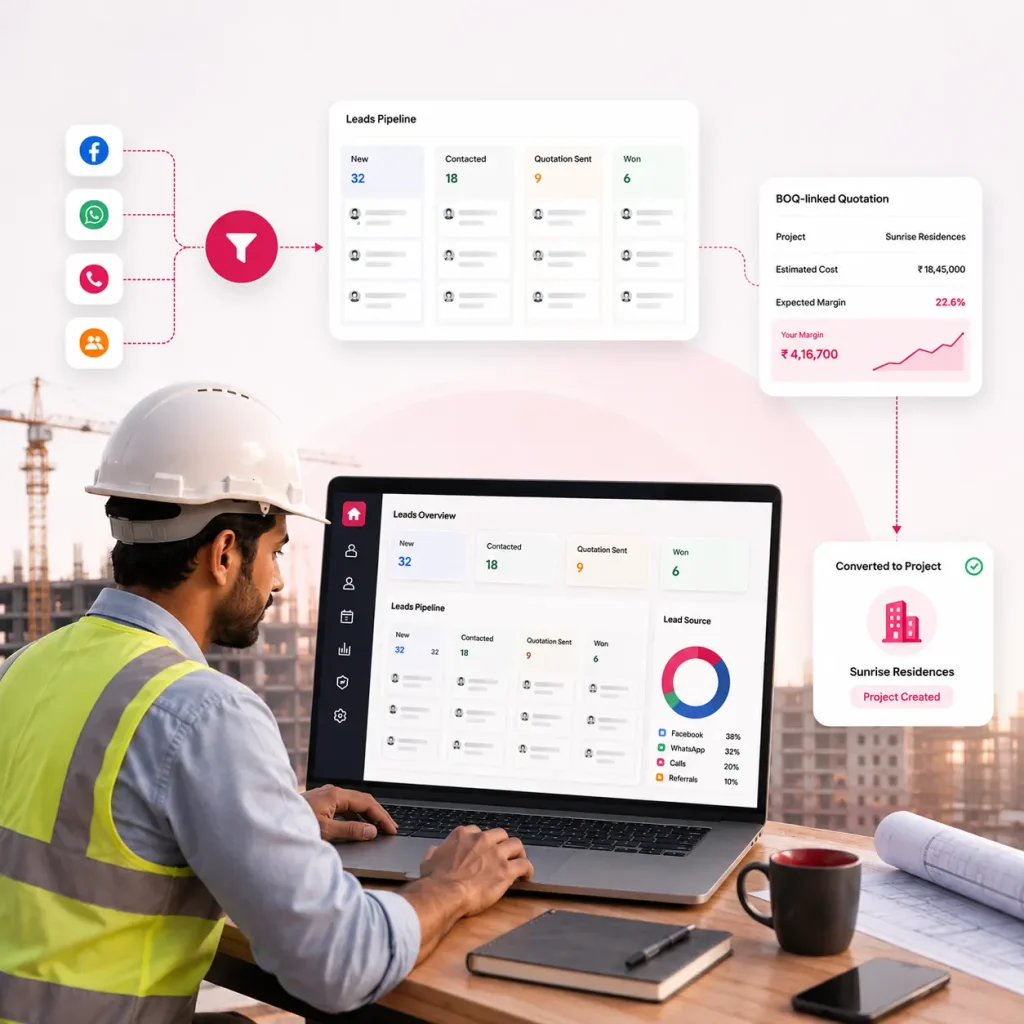
Every lead from Facebook, WhatsApp, and referrals in one pipeline
BOQ-linked quotations with margin visibility before any quote is sent
Confirmed leads convert directly into projects without manual handover
Built for Construction Sales Teams Where One Missed Follow-Up Costs a Project
Construction revenue leakage starts before the first activity is scheduled. Leads go cold, quotations carry wrong rates, and follow-ups depend on memory. Onsite construction CRM gives every company type a structured pre-sales system built around BOQs, rate libraries, and margin visibility so every quote protects profit from the first number entered.
01
Interior and Fit-Out Firms
Interior firms handle high volumes of enquiries simultaneously with frequent design revisions and razor-thin margins on competitive projects. A single quotation built on guessed rates or an outdated BOQ template can erase profit before work begins. Onsite gives fit-out firms a structured lead pipeline, pre-set rate templates, and margin analysis built into every quotation so competitive pricing never comes at the cost of profitability.
03
Specialty Contractors
Specialty contractors managing MEP, structural, or fit-out scopes compete on precision pricing where rate accuracy directly determines whether a won project is profitable or loss-making from day one. Onsite gives specialty contractors a BOQ-linked quotation system with cost breakdowns and margin analysis so every proposal submitted carries verified rates rather than estimates that create losses before execution begins.
02
Building and Civil Contractors
Building and civil contractors receive leads from Facebook, referrals, and direct calls with no single system showing pipeline status or quotation history. Onsite centralizes every lead source, standardizes rate libraries across project types, and gives sales teams margin visibility before any quote leaves the office.
Construction Revenue Leakage Starts in the
Sales Process Not on Site
Most construction companies track their biggest financial failures back to site execution. The real leakage starts earlier. Leads arrive through Facebook, WhatsApp, calls, and referrals and disappear into scattered conversations. Quotations go out built on guessed rates that erode margins before work begins. Follow-ups depend on memory. By the time a project starts, silent losses are already compounding.
Leads Lost Before Anyone Follows Up
Construction enquiries arrive through Facebook ads, WhatsApp messages, phone calls, and referrals simultaneously. Without a structured system capturing every source in one place, high-value leads go cold between conversations. A single missed enquiry on a crore-value project costs more than an entire year of CRM software.
Quotations Built on Guessed Rates
Most construction quotations get assembled from old Excel BOQ templates with rates nobody has verified recently. Margins that looked healthy during quoting erode the moment procurement begins because the rates used to win the project never reflected actual current material costs.
Follow-Ups That Depend on Memory
Construction sales cycles run for weeks or months. Decisions happen across multiple client conversations, site visits, and quotation revisions. When follow-up reminders live in personal notebooks and WhatsApp reminders, serious opportunities go cold between touchpoints because nobody had a system flagging when to call.
Sales Data Never Reaches Site Teams
When a lead converts into a project, the scope, rates, and client commitments made during sales get verbally summarized to the execution team. Details get lost in translation. Site teams execute from incomplete information while the project P&L already reflects margins that the sales process quietly eroded.
How Onsite Construction CRM Helps You Win More Projects
Construction revenue is won or lost in the pre-sales cycle. Onsite gives every contractor and developer a structured system where leads never go cold, quotations always carry verified rates and margin visibility, and confirmed deals convert directly into projects without manual data re-entry between sales and execution teams.
One Pipeline for Every Lead Source
Leads from Facebook ads, WhatsApp messages, website forms, and direct referrals enter Onsite automatically and sit in one structured pipeline with source tracking, lead status, and conversion stage visible at a glance. No lead disappears into a scattered chat or gets forgotten between follow-ups.
BOQ-Linked Quotations with Margin Visibility
Generate accurate quotations and BOQs in minutes using pre-set templates and your own verified rate library. Cost breakdowns and profit margin analysis are visible before any quote leaves the system so every proposal submitted protects margins rather than guessing at them.
Automated Follow-Up Reminders
Construction deals take weeks or months to close across multiple client conversations and quotation revisions. Onsite assigns follow-up reminders to every active lead so sales teams act on schedule rather than from memory, ensuring serious opportunities never go cold between touchpoints.
Direct Conversion from Lead to Project
When a lead is confirmed, Onsite converts the enquiry directly into an active project carrying the agreed scope, rates, and BOQ into the execution system. Sales details reach site teams and project managers without manual handover, verbal summaries, or data re-entry between systems.
Core Features of Onsite Construction CRM Software
Onsite construction CRM connects lead capture, BOQ-linked quotations, margin analysis, automated follow-up reminders, and direct project conversion in one platform. Every enquiry gets tracked from first contact to confirmed project without scattered chats, guessed rates, or manual handovers between sales and execution teams.
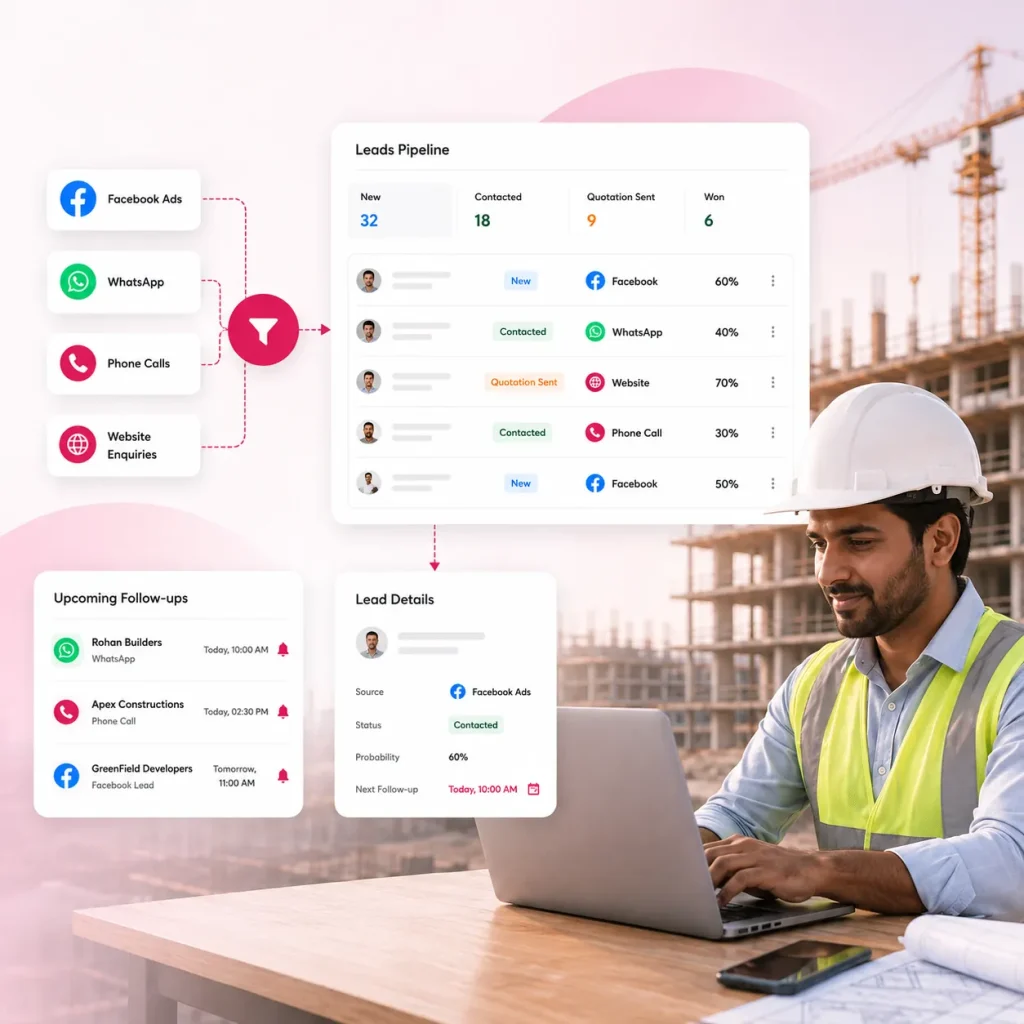
Bring all your leads, enquiries & conversations into one place
Onsite gives construction teams a single, organised system to manage every enquiry, from Facebook ads to phone calls and whatsapp. No more scattered leads or missed opportunities. Your sales pipeline stays updated, structured, and instantly accessible to your entire team.
Track every enquiry with status, source, and probability
Use automated reminders to ensure follow-ups are never missed
Import leads automatically from Facebook, WhatsApp, and website
Organise leads, BOQs, rate sheets, & quotations in one place
BOQ-Linked Quotations with Built-In Margin Analysis
Most construction quotations go out built on rates copied from old project BOQs that nobody has verified against current procurement costs. When those rates win the project, margins erode from day one because the numbers used to close the deal never reflected actual material and labour costs. Onsite gives sales teams a pre-set template library with their own verified rate database to generate BOQs and quotations in minutes. Cost breakdowns and profit margin analysis are visible before any quote leaves the system. Every proposal submitted carries rates that protect margins rather than guess at them.


Automated Follow-Ups and Direct Lead to Project Conversion
Construction deals take time. Onsite CRM helps you follow up consistently, so you never miss a call, meeting, or message that could win you the job. Onsite assigns automated follow-up reminders to every active lead and tracks every conversation and activity in one place so sales teams act on schedule rather than from memory. When a lead is confirmed, Onsite converts it directly into an active project carrying the agreed BOQ, scope, and rates into the execution system without manual handover or data re-entry.
Get timely reminders to follow up with leads and clients.
Track every conversation and activity in one place.
What Construction Companies Say About Onsite
Construction CRM Software
Construction companies using Onsite CRM report fewer missed leads, faster quotation cycles, and complete margin visibility before any quote reaches a client.
Customer Success Story
“
Before Onsite, we built every BOQ from an old Excel file and hoped the rates were still accurate. We won projects and discovered the margin was gone by the time procurement started. Onsite gives us a rate library we actually maintain. Every quotation now shows cost breakdown and profit margin before we send it. We stopped guessing and started winning profitable projects.
★
★
★
★
★
✕ Before Onsite
BOQ built from stale Excel rates · Margins discovered missing after winning · No cost visibility before quotation
→
✓ After Onsite
Live rate library · Cost breakdown and margin visible before sending · Winning profitable projects consistently
Mr. Kathirvel, Founder
Theeran Avant · Erode, Tamil Nadu · Mechanical Construction Company
Extended Features for Construction CRM and Sales Management
Onsite construction CRM goes beyond lead tracking and quotation generation. Pipeline analytics, rate library management, quotation version comparison, margin reports, and direct lead to project conversion connect every stage of your pre-sales cycle to verified execution data without Excel dependency or scattered WhatsApp conversations.
Lead Source Tracking and Conversion Analytics
Every lead in Onsite carries its source tag showing whether it came from Facebook, WhatsApp, a website form, a referral, or a direct call. Conversion rates by source update automatically giving sales managers visibility into which channels produce the most profitable projects and where to focus acquisition effort.
Quotation Version Control and Comparison
Every revision to a quotation gets saved as a separate version in Onsite with the date, changes made, and rate adjustments recorded. Sales teams compare versions before sending to ensure the final quote reflects the most accurate rates and margins without losing track of what was offered in earlier discussions.
Rate Library and Template
Management
Sales teams maintain a centralized rate library in Onsite with material, labour, and subcontractor rates updated regularly and accessible to every team member generating quotations. Pre-set BOQ templates standardize quote formats across project types, eliminating the outdated Excel files that different team members maintain independently and never synchronize.
Automated Follow-Up Reminders and Deal Stage Tracking
Every active lead in Onsite carries a follow-up date and assigned owner. Automated reminders alert sales team members when follow-up is due without relying on personal notes or memory. Deal stage tracking shows management which leads are progressing, which are stalling, and which need immediate attention across the full pipeline.
Margin and Profitability Reports by Project Type
Onsite generates margin analysis reports showing cost breakdown, markup, and profit percentage across all quotations sent and projects won. Sales managers see which project types, client segments, and rate categories deliver the strongest margins, enabling pricing decisions based on historical performance rather than estimates and guesswork.
Direct Lead to Project Conversion with BOQ Handover
When a lead is confirmed in Onsite, the agreed BOQ, scope details, and client information convert directly into an active project without manual re-entry or verbal handover to the execution team. Site teams and project managers start with complete, verified information from day one rather than reconstructing scope from scattered conversations.
Stop Managing Construction Leads and Quotations on WhatsApp and Excel
Excel has no lead pipeline, no follow-up system, no rate library with margin analysis, and no mechanism to convert a confirmed quotation directly into a project. WhatsApp has no structured conversation history, no BOQ attachment trail, and no reminder system that flags when a high-value enquiry has gone cold. Construction sales managed through both tools loses revenue silently before a single activity is ever scheduled.
Leads tracked in WhatsApp chats go cold the moment the conversation moves to the next message thread.
Excel BOQs copied from old projects carry outdated rates that erode margins before the project even begins.
Follow-ups dependent on memory and personal notes mean serious enquiries go unanswered for days without anyone noticing.
When a deal closes in WhatsApp, scope details and agreed rates never reach the execution team without manual re-entry.

Stop Losing Construction Projects to Missed Follow-Ups and Guessed Rates. Switch to Onsite.
Construction revenue leakage starts before the first activity is scheduled. Leads go cold between WhatsApp conversations. Quotations go out built on rates nobody verified. Follow-ups depend on memory. Onsite gives every contractor and developer a structured pre-sales system where every lead is captured automatically, every quotation carries verified BOQ rates with margin analysis, and every confirmed deal converts directly into a project without manual handover or data re-entry between sales and execution teams.
FAQs
What is construction CRM software?
Construction CRM software is a platform built specifically for contractors, builders, and developers to manage the pre-sales cycle from first enquiry to confirmed project. Unlike generic CRM tools designed for retail or service businesses, construction CRM handles BOQ-linked quotations, rate libraries with margin analysis, multi-channel lead capture from Facebook and WhatsApp, and direct conversion of confirmed leads into active projects carrying agreed scope and rates into the execution system without manual re-entry.
How does Onsite construction CRM work?
Onsite CRM works across four connected steps. Leads enter automatically from Facebook ads, WhatsApp messages, website forms, and direct referrals into one structured pipeline with source tracking and conversion stage visibility. Sales teams generate BOQ-linked quotations in minutes from a verified rate library with cost breakdown and margin analysis built in. Automated follow-up reminders ensure every active lead gets contacted on schedule. When a lead is confirmed, it converts directly into an active project carrying the agreed BOQ and scope into execution without manual handover.
How is Onsite CRM different from generic CRM tools like Zoho or Salesforce?
Generic CRM tools manage contacts, deals, and pipelines but have no construction-specific capabilities. They cannot generate BOQ-linked quotations, maintain a construction rate library with margin analysis, or convert a confirmed lead directly into a project with BOQ and scope carried into execution. Onsite is built for construction workflows specifically, connecting the pre-sales cycle to project planning, budgeting, and execution in one platform. A contractor using Zoho for CRM still needs separate tools for quotations, BOQs, and project management. Onsite replaces all three.
How does Onsite prevent margin erosion in construction quotations?
Margin erosion in construction quotations happens when rates are copied from old project BOQs without verification against current procurement costs. Onsite prevents this through a centralized rate library that sales teams maintain and update regularly, accessible to every team member generating quotations. Cost breakdown and profit margin analysis are visible before any quote leaves the system. Sales teams see exactly what margin a project will deliver before committing to a price rather than discovering the margin was insufficient when procurement costs arrive weeks later.
How does Onsite handle leads from multiple sources like Facebook and WhatsApp?
Onsite imports leads automatically from Facebook ad campaigns, website contact forms, and WhatsApp without requiring manual entry. Every lead that enters the system carries its source tag, assigned owner, project type, and initial status. Sales managers see total pipeline volume broken down by source, conversion stage, and probability from one dashboard without asking team members for manual updates. Lead source analytics show which channels produce the most profitable projects, enabling data-driven decisions about where to invest sales and marketing effort.
How do automated follow-up reminders work in Onsite CRM?
Every active lead in Onsite carries a follow-up date and an assigned owner. When a follow-up date arrives, Onsite sends an automatic reminder to the responsible sales team member through the app. The reminder shows the lead details, last conversation summary, and current deal stage so the team member has full context before making contact. Follow-up history gets logged automatically after each interaction. Sales managers see which leads have pending follow-ups, which are overdue, and which team members are consistently following through on their pipeline.
How does Onsite convert a confirmed lead into a project?
When a lead reaches confirmed status in Onsite, the system converts the enquiry into an active project in one action. The agreed BOQ, scope details, client information, and rate commitments made during the sales process carry directly into the project execution system without manual re-entry or verbal handover to the site team. Project managers and site engineers start with complete, verified information from day one. The numbers that won the deal are the same numbers the execution team works from, eliminating the scope mismatches and margin surprises that verbal handovers create.
Can Onsite CRM handle quotation revisions and version control?
Yes. Every revision to a quotation in Onsite gets saved as a separate version with the date, rate changes, and scope modifications recorded. Sales teams compare versions before sending the final quote to ensure the most accurate rates and margins are reflected. When clients request revisions, the original version remains accessible for reference. This eliminates the version confusion that happens when quotations get revised multiple times across email threads and WhatsApp conversations, where nobody can confirm with certainty which version a client accepted.