
Restoring Site Visibility for UAE Contractors Through Task Monitoring

Powerful task management software tailored for contractors in the UAE.
The UAE’s construction sector never stops. There are huge infrastructural projects going on in Abu Dhabi and Sharjah, while Dubai is building skyscrapers that reach the sky. Contractors are required to deliver promptly, manage teams with different skills, work with many subcontractors, and keep suppliers on the same page. Trying to keep track of everything with spreadsheets, phone calls, and dispersed messages can be confusing, cause delays that cost money, and even hurt your finances. That’s where Task Monitoring Software UAE really helps. Contractors in the UAE now turn to task management tools to monitor work progress and keep jobs on schedule. It gives managers full visibility, makes communication easier, and maintains all projects on track, on schedule, and within budget by bringing everything together in one place.
Why Task Visibility Matters More in the UAE?
UAE is a hub of buildings and every other day there is many construction projects are going on there. Construction in the UAE is shaped by specific operating pressures. When delays are happening, it is not affecting just one contractor, but it is affecting a group of subcontractors, consultants, and suppliers. When labor and equipment costs are raising, the ideal time that they spend on a site can cause financial losses. Clients constantly ask for progress updates with proof. Regulatory reviews and inspection add another layer of accountability. All of these things become a huge mess when there are less visibility and more assumptions.
Where Manual Task Tracking Breaks Down?
Many contractors still prefer using spreadsheets, diaries, phone calls, or messaging apps, but if you are working in the fast-paced environment like UAE, you need to step up your game. When you are using traditional methods or manual tracking, updates arrive a little too late. When they arrive, you cannot undo what has been done at the site. Tasks can be marked done, but without any clarity, you wouldn’t know how much of it was actually completed and by what time. You wouldn’t discover blocked activities until the end of the month, and by the time management reviews progress, the opportunity to correct course is already limited. These gaps are not as bothering initially, but later on, it quietly eats up your margins. Spreadsheets and manual logs lack visibility and cannot match the insights offered by dedicated task tracking software.
What daily task-level visibility reveals that periodic reports miss?
When execution is linked to the planning and teams record daily progress and link it to the ground activity, the execution becomes more visible and everyday report is easier to make. For summary report, the information can include the list of the tasks that consistently overrun planned duration, the activities that has been delayed because of the approvals, a repeated change or correction in a particular activity or task, and performance differences between labour and subcontractors. This information helps with execution visibility. These progress updates help you get real site conditions and can be fixed before you face greater loss.
How improved task visibility changes day-to-day execution?
Task tracking software helps keep everything in order on the job site every day.
Instead of gathering notes and communications from several places, site teams log their progress on tasks directly, typically from mobile phones. Each update is connected to a specific task, its location, and the time it was done. There is no room for interpretation when it comes to measuring progress. Supervisors, planners, and managers can see the information as soon as it is logged.
This gives everyone a clear, accurate image of what’s going on at the site right now, instead of what they think or hear about later.
How It Improves Daily Site Operations?
Clearer Start-of-Day Planning
When you have clarity on what was done yesterday as a site, today’s work planning becomes realistic. Teams are aware of what is completed, what is pending, and what needs to be done. This brings visibility and promotes clearer planning on day-to-day basis.
Reduced Follow-Ups
When you have proper record of day-to-day activities and clear visibility on project progress, supervisors do not need to waste time on calls or messages to get updates. You can get everything at a single place, right in front of you. The data is collected, not scattered, with supporting details where needed.
Better Coordination Between Teams
When the tasks and progress is visible, it is easier to assign tasks. You can know when the delay is about to happen so you can work on avoiding it.
Faster Problem Identification
Blocked tasks, low productivity, or repeated delays stand out early, allowing timely corrective action.
How Onsite (Task Monitoring Software) Transforms Task Monitoring?
Real-time Task Assignment
The future of construction management is mobile, and companies that use it are already making decisions faster, cutting down on delays, and keeping costs under control like never before. With Onsite, you can keep track of your whole project in your pocket, which lets you operate it faster, better, and more profitably, no matter where the work is taking place. You can assign tasks from anywhere and anytime. You don’t need to make calls and remind anyone, all you need is Onsite construction management software.
Clear visibility across sites
Anyone, from project managers on site to senior management in the office, may log in and monitor the status of a project in real time. This cuts down on unnecessary site visits, speeds up decisions, and makes it obvious who is responsible. Onsite construction management software acts as a complete task management software, letting you assign, monitor, and report tasks across sites.
Integration of tasks with materials and billing
There are always materials behind every construction task, like cement, steel, work hours, and more. The hard part is keeping track of where these resources travel and ensuring nothing gets lost. Onsite immediately links every task to material records and financial information. That means managers can quickly find out what’s been used, what’s been billed, and what’s still to come. No more surprise bills or late payments. Onsite keeps everything open and honest, which helps protect profits and keeps cash flow consistent. This way, projects may continue forward without worrying about money.
Retention tracking
When it’s time to finish a project, retention amounts, and warranty papers typically go missing. With Onsite, things are stored safely and can be easily found.
Managing multiple projects with one dashboard
In the UAE, it’s usual for contractors to work on more than one project at a time. For example, they might be building a villa in Dubai, a commercial skyscraper in Sharjah, and even a road in Abu Dhabi. It can be hard to keep track of all of them. Onsite makes it easy by putting all of your sites on one easy-to-use dashboard. With just one click, managers can switch between projects, see how far they’ve come on each one, and immediately find any problems that could create delays. This one view makes sure that no project is missed and that the same high standards are kept on all sites, whether they are tiny residential builds or huge infrastructure projects. Built-in dashboards provide clear views of progress and performance using task tracking metrics
Financial and Business Impact for Contractors
There is a demonstrable effect on project economics when tasks are monitored.
When you keep track of when tasks are done correctly, you can use your workers more effectively. Instead than sitting around, equipment is used where it makes things better. Clear documents back up progress claims, which cuts down on arguments and speeds up approvals. When forecasts are based on real execution data instead of guesses, they are more accurate.
These daily changes pile up over time. It’s easier to safeguard margins, deliveries are more reliable, and teams spend less time repairing problems after they happen. Integrated project and task management tools provide insights across multiple sites and phases.
Manual Tracking vs Structured Task Monitoring
| Aspect | Manual Methods | Task Monitoring Software |
|---|---|---|
| Update timing | End of day or later | Real time |
| Progress clarity | Descriptive | Measured |
| Resource linkage | Weak | Direct |
| Issue detection | After delays occur | Early |
| Billing support | Assumptions | Verifiable records |
| Accountability | Informal | Traceable |
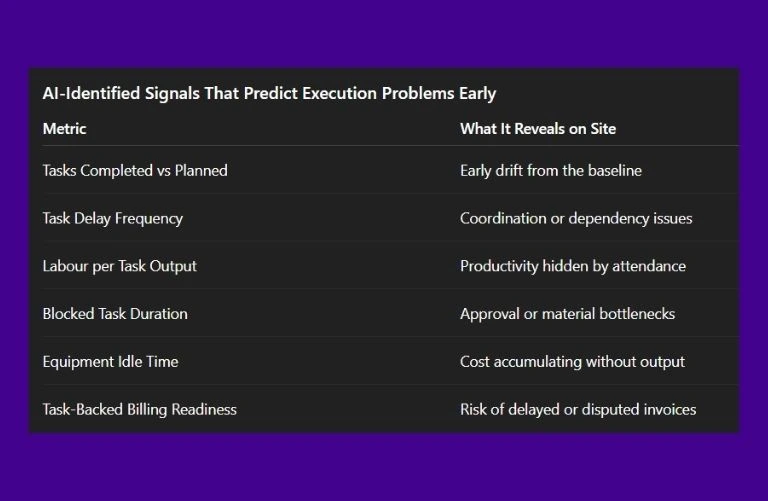
What Chat-GPT Flags as Task-Level Risk Indicators?
These observations reflect how execution problems develop in real project conditions rather than how they appear in reports.
Conclusion
In the UAE’s fast-paced construction business, efficiency isn’t simply a nice-to-have; it’s what makes certain projects lucrative and others lose money. Onsite gives contractors a clear and organized way to keep things in check. You may see tasks in real time, site modifications go straight to the office, and deadlines don’t go missed. Onsite is more than just a list of things to do. It is based on the genuine problems that construction companies face, such as keeping teams accountable, keeping projects on schedule, and setting up enterprises for long-term growth and profitability. Adopting modern task management tools gives UAE contractors better visibility, faster execution, and stronger accountability.
Want to get clearer visibility on site progress tracking?
FAQs
1. What is task management software?
Task management software helps contractors organize, assign, and monitor work so teams can execute tasks efficiently and keep projects on schedule.
2. How does task tracking software support project visibility?
Task tracking software gives real-time insights into task progress and completion status so contractors can quickly spot delays and act before issues escalate.
3. Why do UAE contractors need a task management system?
A task management system gives UAE contractors a central way to plan work, track progress, and coordinate field teams without relying on spreadsheets or manual logs.
4. What features should a task management platform include for contractors?
A task management platform for contractors should include task assignment, scheduling, tracking, and reporting so teams stay aligned across sites.
5. How do team task management tools improve collaboration?
Team task management tools help crews share updates, view responsibilities, and communicate progress, improving alignment and reducing miscommunication.
6. Can project and task management tools handle complex jobsite workflows?
Yes. Project and task management tools can capture dependencies, priorities, and status updates, making it easier to organize work and react to changes in scope.
7. What role does task planning software play in getting work started?
Task planning software helps contractors map out activities, set deadlines, and allocate resources so teams are clear on what needs to be done and when.
