
Reidius Infra Case Study | Onsite Construction Software
How Reidius Infra Replaced WhatsApp Project Management with Real-Time Execution Control
Reidius Infra was managing 250+ home projects through WhatsApp groups and Excel sheets. Client escalations were rising, delays were going undetected, and reports took hours to prepare. Onsite changed all of that.

40% drop in client update calls
2 hours saved daily on project reporting
30% improvement in on-time task completion

Company Overview
Reidius Infra is a Jaipur-based design and build construction company delivering residential homes, interior projects, and commercial spaces across Rajasthan. Founded by Mr. Manish Kumar, the company has built its reputation on two core promises: on-time delivery and complete transparency with clients throughout the construction journey. With a team of over 50 design experts, a 120-day construction guarantee, and 250 plus homes completed across Jaipur, Reidius Infra serves homeowners who expect to stay informed and in control of their project from day one to handover.
CLIENT NAME
Reidius Infra
CLIENT LOCATION
Jaipur, Rajasthan
CATEGORY
Design and Build Construction
The Challenges Reidius Infra Faced Before Onsite
As Reidius Infra grew from managing a handful of projects to running multiple concurrent sites across Jaipur, the informal tools the team relied on began creating operational failures that directly affected client relationships and delivery commitments.
01
Client Updates Stuck in a Broken Relay Chain
Site engineers sent progress photos to WhatsApp groups. Project managers filtered and summarized the information before relaying it to clients. By the time updates reached clients, information was hours old, filtered through multiple hands, and stripped of the visual evidence that builds genuine confidence. Clients called repeatedly for reassurance that the WhatsApp relay could not provide.
02
Project Schedules Disconnected from Site Reality
Activity timelines lived in Excel files that had no connection to actual site progress. Task assignments happened verbally or through WhatsApp messages that disappeared in conversation threads. When delays occurred, no structured record showed what was assigned, to whom, and when. Reconstructing timelines required piecing together fragmented histories that were always incomplete.
03
Documentation Was Manual and Inconsistent
Progress photos, activity records, design revisions, and inspection notes scattered across individual phones, WhatsApp groups, and email threads. When clients requested project status reports, someone had to manually compile information from multiple scattered sources. Reports were time-consuming to prepare, inconsistent in format, and already outdated by the time they reached clients.
How Onsite Solved It
Reidius Infra implemented Onsite across all active projects. The implementation focused on four areas directly connected to their operational challenges.
Daily Progress Tracking with Geo-Tagged Documentation
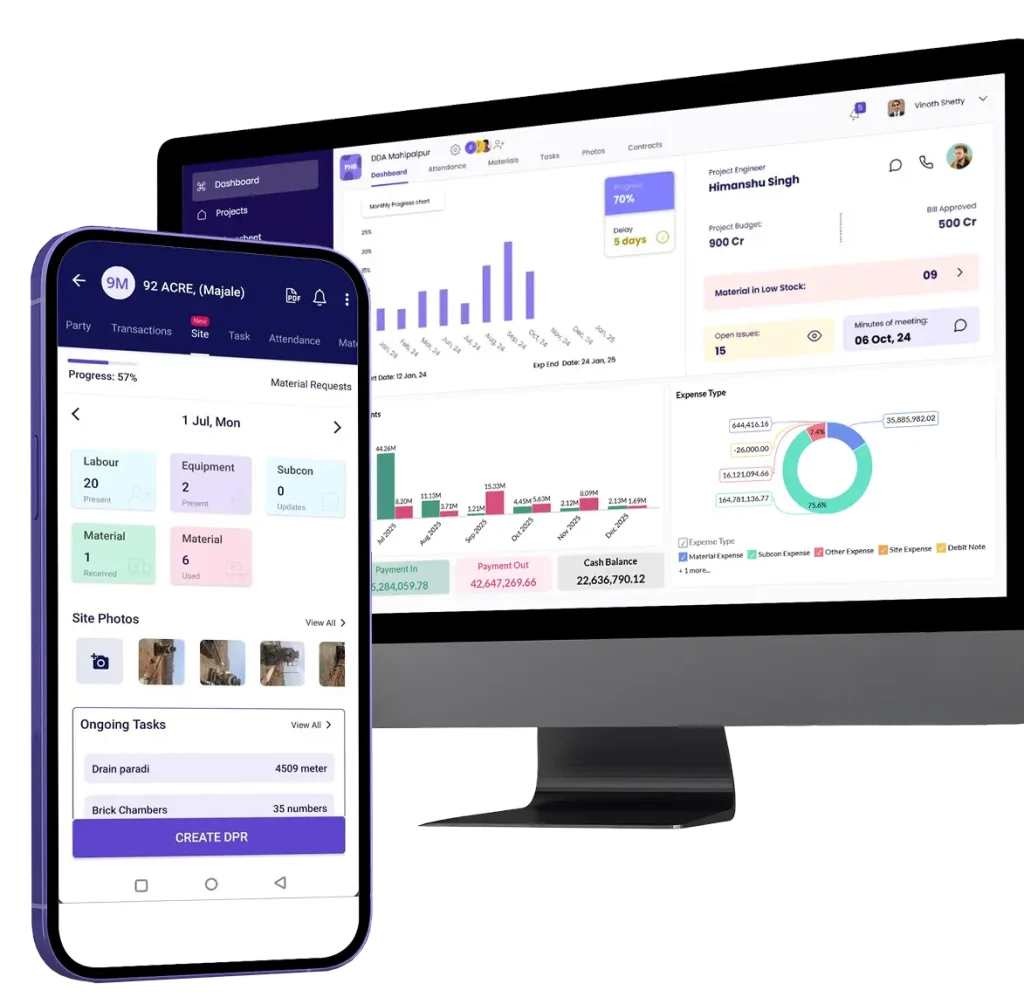
Site engineers began capturing daily progress through Onsite’s mobile app directly from site. Every activity update included geo-tagged photographs with automatic timestamps, eliminating the relay chain between site and client entirely. Progress entered by engineers appeared in project dashboards in real time, accessible to project managers and clients simultaneously. The daily progress report generated automatically from site entries each day, giving Mr. Manish Kumar consolidated portfolio visibility every morning without a single phone call.
Geo-tagged photos with timestamps captured directly from site
Real-time dashboard accessible to clients without manual sharing
Automated daily progress reports across all active projects
Structured Task Assignment and Activity Scheduling
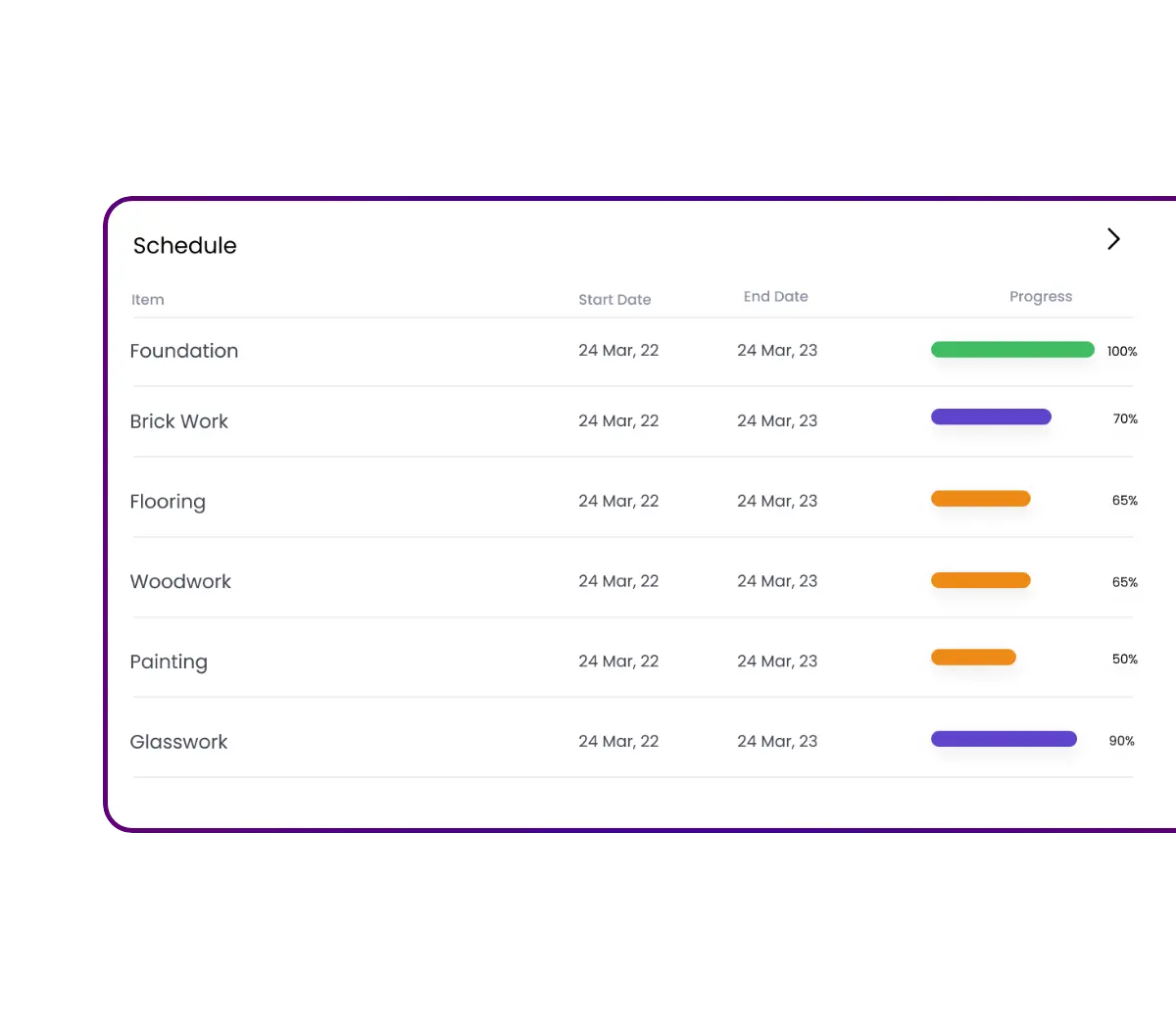
All project activities got structured within Onsite with defined start dates, completion targets, responsible team members, and task dependencies mapped between activities. Task assignments moved from WhatsApp messages to digital records showing exactly who was responsible for what and when completion was expected. Delay alerts surfaced automatically when activities fell behind schedule, giving project managers advance warning before timeline impacts reached clients. The 120-day delivery guarantee Reidius Infra built their reputation on became significantly more achievable with early delay detection built into daily operations.
Centralized Project Documentation
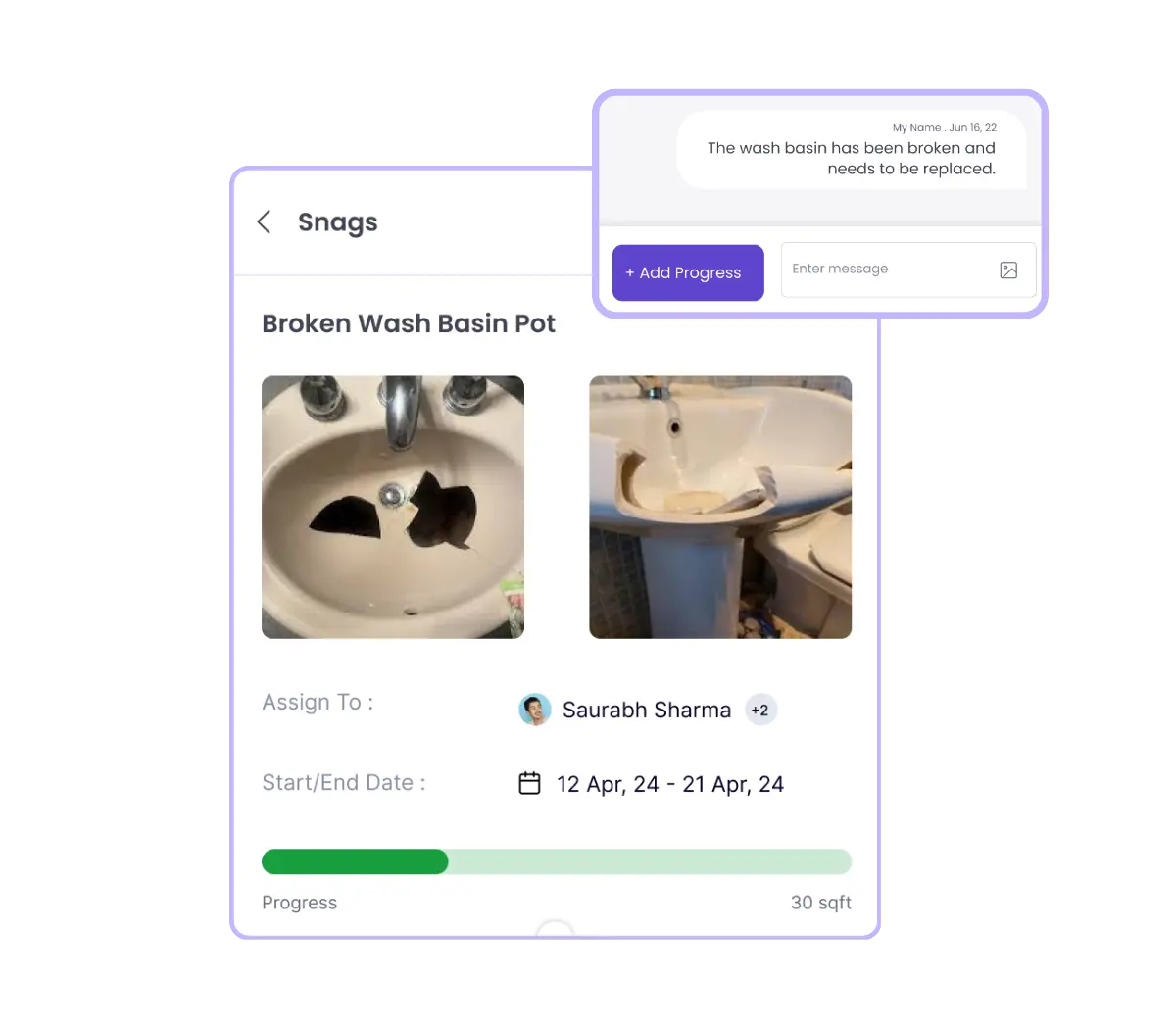
All project documentation including progress photographs, task completion records, activity timelines, design revision notes, and inspection records centralized within Onsite, organized by project and building continuously as site teams updated progress. When clients requested project status reports, Reidius Infra teams generated structured reports directly from Onsite data rather than manually compiling scattered information. Handover documentation that previously required days of compilation existed as a complete project record built automatically from day one of site activity.
All project documentation organized and accessible by project
Structured client reports generated directly from live site data
Complete handover records built automatically throughout the project
The Results
Within the first two months of Onsite implementation, measurable improvements appeared across client communication, task execution, and operational efficiency.
40% drop in client update calls
Client communication transformed most visibly and most quickly. Inbound calls from clients requesting project status updates dropped by approximately 40% within the first two months. Clients who previously called multiple times per week now accessed live progress information independently through structured reports backed by timestamped site photography. The calls that did happen shifted from anxiety-driven status requests to productive conversations about upcoming decisions, because both parties shared the same accurate information going into every discussion.
30% improvement in on-time task completion
Task completion discipline improved significantly once accountability became visible and structured. On-time task completion rates improved by approximately 30% across active projects as site engineers tracked their own assignments against defined schedules rather than working from memory and verbal instructions. Delays that previously went undetected until they impacted milestone deliveries now surfaced within 24 to 48 hours, allowing corrective action before downstream activities were affected and before clients noticed any impact on their project timeline.
3- 2 hours saved per project on reporting
Project reporting that previously consumed two or more hours per project per day in manual compilation now happened automatically from Onsite data. Project managers reclaimed time previously spent chasing site updates and formatting client reports. That recovered time shifted toward actual project management, quality oversight, and client relationship work. The operational output per project manager increased without requiring additional headcount as the project portfolio continued growing.
Message from the founder of Reidius Infra
We were looking for construction management software that could help us share clear project updates with clients. With Onsite, all the progress and documentation details are visible in one place. It has made client discussions much smoother because we are now talking with actual site data instead of guesses.
Mr. Manish Kumar, Founder
Reidius Infra, Jaipur, Rajasthan, India

See How Onsite Works for Your Construction Business
If your team tracks projects through WhatsApp groups, manually compiles client reports, or discovers delays only after milestones are missed, Onsite gives you the real-time execution control that growing construction companies need. Connect site teams, project managers, and clients in one platform without complexity or manual effort.
FAQs
Reidius Infra managed all project communication through WhatsApp groups and verbal updates, creating a broken relay chain between site engineers, project managers, and clients. Activity schedules lived in Excel files disconnected from actual site progress. Task assignments happened verbally with no digital record of ownership or deadlines. Documentation scattered across individual phones and WhatsApp threads made client reporting a manual, time-consuming process. As project volumes grew, these informal systems created coordination failures that directly affected client relationships and delivery commitments.
Reidius Infra implemented four core modules: Progress Tracking for geo-tagged daily site updates and automated DPR generation, Task and Project Planning for structured activity scheduling with defined owners and deadlines, Reports and Analytics for automated client reporting generated directly from live site data, and Portfolio Management for consolidated visibility across all active projects from a single dashboard. These four modules directly addressed their specific challenges around client communication, task accountability, documentation, and management visibility.
Onsite eliminated the WhatsApp relay chain entirely. Site engineers captured daily progress with geo-tagged photographs directly from site through the mobile app. That data appeared in real-time dashboards accessible to clients without any manual sharing or summarization. Clients who previously called multiple times per week for updates could now access live project information independently. Inbound client update calls dropped by approximately 40% within the first two months, and client meetings shifted from defensive status discussions to forward-looking project conversations.
Before Onsite, task assignments at Reidius Infra happened through WhatsApp messages or verbal instructions during site visits. There was no digital record of who was assigned what, when assignments were made, or whether tasks were completed on time. After implementing Onsite, every activity had a named owner, a defined deadline, and a completion status visible to management in real time. Delay alerts surfaced automatically when activities fell behind, giving project managers 24 to 48 hours of advance warning before timeline impacts reached clients or disrupted dependent activities.
Reidius Infra achieved three measurable outcomes within the first two months of implementation. Client update calls dropped by approximately 40% as clients began accessing real-time project information independently rather than calling for manual updates. On-time task completion improved by approximately 30% as digital accountability replaced verbal task assignments. Project reporting time reduced by approximately 2 hours per project per day as automated reports replaced manual compilation from scattered WhatsApp and Excel sources. These improvements allowed project managers to redirect time from administrative work toward actual project execution and client relationship management.
Yes. Onsite works specifically well for residential and interior construction companies that manage multiple concurrent projects with homeowner clients who expect frequent, accurate progress updates. The mobile-first design means site engineers on active construction sites can capture progress, photographs, and task updates without disrupting their workflow. Client-facing dashboards give homeowners real-time visibility without requiring manual reporting effort from the project team. Reidius Infra’s experience demonstrates that residential builders managing 10 or more concurrent projects gain the most immediate impact from Onsite’s progress tracking and client communication features.
Onsite is designed for rapid deployment without lengthy technical implementation. For a company like Reidius Infra managing residential and interior projects, the core modules including progress tracking, task management, and reporting are typically operational within days of account setup. Site engineers begin capturing progress through the mobile app immediately after onboarding. The learning curve is minimal because the interface is built for construction field teams, not office software users. Most companies see measurable improvements in reporting efficiency and client communication within the first 30 days of active use.
Yes. This is one of the most significant operational benefits Reidius Infra experienced. Before Onsite, Mr. Manish Kumar needed individual calls with each project manager to understand portfolio status. As project volumes grew, this became unsustainable. Onsite’s consolidated dashboard gave management real-time visibility across all active projects without requiring proportional increases in communication effort. Portfolio-level delay alerts, documentation tracking, and progress visibility scale automatically as new projects get added. Companies growing from 10 to 25 or more concurrent projects maintain the same management control without adding administrative overhead.